there is no music
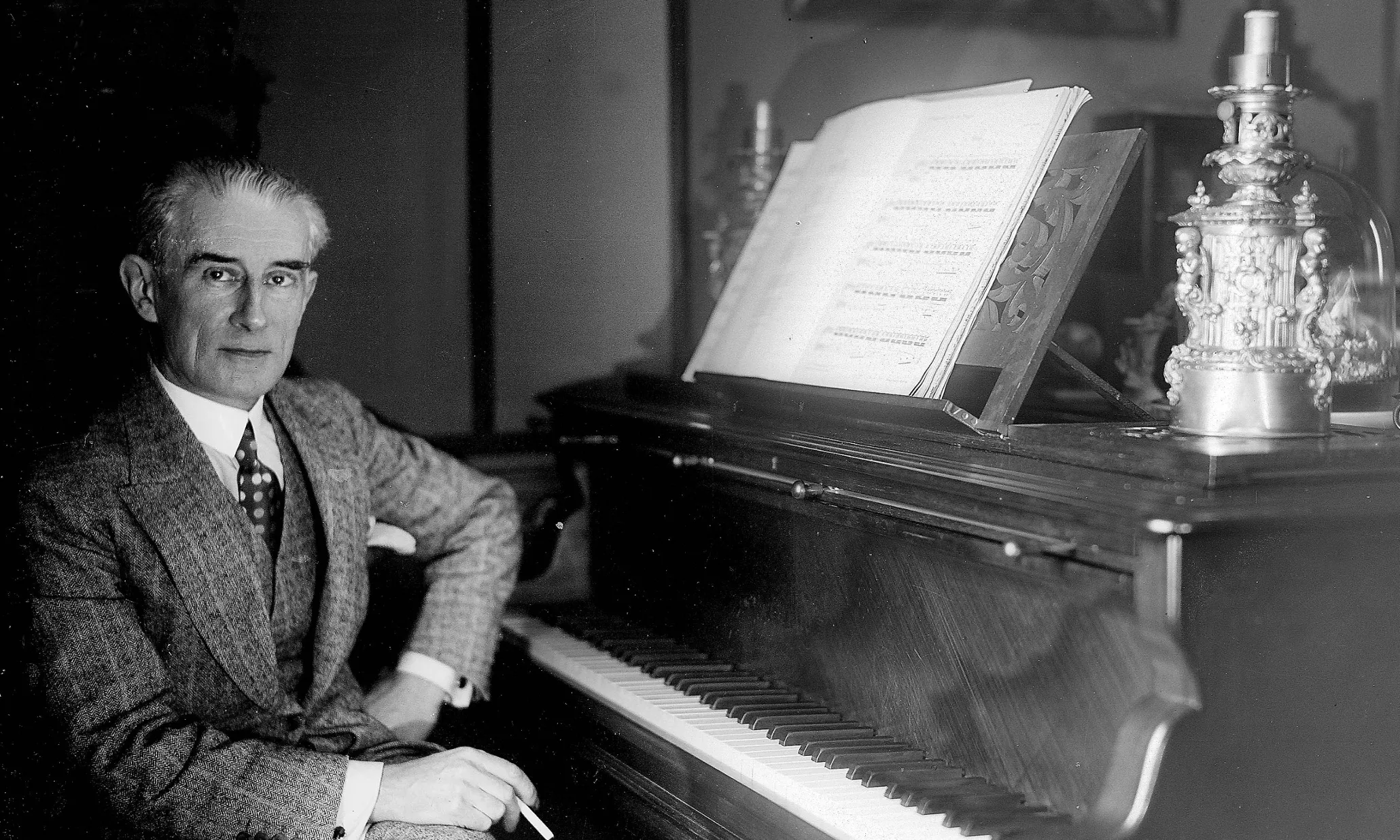
Boléro
Part 1: Boléro
Ravel's Boléro is a classical masterpiece written in 1928, commissioned by patron and dancer Ida Rubenstein. According to Maurice Ravel himself, the piece is less music and more an experiment in human patience. It's built on a very simple rhythm played by a snare drum in ¾ time, unchanging throughout the whole piece. And yet the emergent beauty of the composition is hard to miss, it is strongly cathartic for any conscious mind.
The Snare Drum
Mathematics is axiomatic, genealogic and traceable. There is logical order and a simple ability to disprove. But the dreams and hopes of general mathematical formalisation by the likes of Hilbert were blatantly shattered by Gödel, who has shown the world how statements can be both unprovable and the whole of mathematics incomplete.
But Godel's work feels more like the exception than the rule; and yet it gives us beauty, as mathematics is infinite, but at the same time infinitely perfect. It's not a closed cathedral, but an open landscape. In the exact words of Wigner, "The unreasonable efficiency of mathematics in science is a gift we neither understand nor deserve".
But I make the argument that maths is actually the Snare Drum itself, it's the core, unchanging beat that prevails, unbroken, through exploration. Godel didn't break it, he showed us that everything is hiding within, on top, below, or to the side of it.
The plucked strings
What maybe isn't so mainstream is the tool Godel used to show us the full scale of maths: number theory. The literal proof of math's incompleteness is encoded in the snare drum itself. But in very early bars, very foundational as well, on top of the snare drum, come the plucked strings. Light yet always present. These are the emergent tools of mathematics, tools of great application: prime numbers.
If you think physically, primes are the representation of singularities, noiseless entities. Noise is an emergent property of their interaction, the composition. But the noisy emergent entity will always have this underlying structure, always exploitable.
The question then becomes: What is the most optimal algorithm to exploit the structure of the noise?
The mathematically divine solution is not an 'most optimal', it's the solution. A most optimal algorithm is a continual approximation of a discrete reality, a good guess. Continuation is a myth, it's the most optimal algorithm we have currently, but it's not the divine solution.
Thus to exploit the structure of the snare drums, all representations of reality should be encoded in the plucked strings, as this is the closest layer to reality itself.
The Flute
What comes next is the first conscious element of Boléro, the flute. While the snare drum is more like a core truth, the flute and its rhythm is what we notice, what we start consciously enjoying. It wouldn't be there without the snare drum, but our interpretation of the composition wouldn't be there without it. It's more physical, it exists.
Reality is a manifestation of mathematics we can interact with and fathom. It's what we exist in. It builds upon the snare drum. It is also where we begin to approximate, as infinity arguably does not exist here. Everything is finite.
The flute we hear, we can prove it empirically, at least in our limited conscious interpretation. Approximation mostly works here because our resolution is finite as well.
The Clarinet
When the clarinet enters it's more of a refraction from the flute. This is the actual approximation. Tools like Einstein's relativity aren't unbreakable core truths, they are approximations that work extremely well in limited axiomatic ranges. We are working in the genealogic range of Maxwell's equations, building on top of them, but working orthogonally to quantum effects.
The clarinet is fractured, but works. It doesn't work alone, it isn't the core truth. But it works incredibly well as a layer on top of the previous.
The Bassoon, Oboe d'Amore and beyond
What comes next is very much a metaphoric parallel to everything that came within. We get more heavier brasses, which build upon or refract slightly from previous undertones, formalizing the composition.
What is achieved here is essentially Godel's north star: self-reference. The approximations become the fundamentals, and we build approximations of the approximations. This is where we take reality (an approximation) and built virtual representations of it, in which we preform optimisations.
This is where computer science and machine learning lives, it's in the approximation of the approximation. The further brasses sound well, they fit in, they build up the tempo but they are nothing new, nothing unexpected. Until we reach the E major as a brief shift from C major.
It all works together, a composition, build upon layers of foundational core truths, approximations and self references.
Ravel said "I written only one masterpiece, Boléro. Unfortunately there is no music in it". God isn't wrong. Music, creativity, doesn't exist. Its an emergent property of simple truths and simple interactions.
Before going for a swim, god sits at a piano, plays a simple tune and says "Don't you think this theme has a certain insistent charm? I am going to repeat it for fifteen minutes."
And it works.
Part 2: God doesn't bow
When Boléro was performed live in 1930 at the New York Philharmonic, Ravel got into an argument with Arturo Toscanini over the tempo. While Ravel preferred a single unified tempo, Toscanini made it more dramatic, saying "it was the only way to save the work". Ravel declined to bow to the applause after the performance, as he was annoyed about the added flare.
It's the simplicity that leads to emergent complexity and the portrayal of an absolute masterpiece, like the universe.
To try and find the algorithm, we have to work backwards; working tirelessly through the self-referencing loops of apparent reality until we reach the Snare Drum. The craze is in the journey, no specific unpacking will give us a large catharsis, the journey and anticipation will.
And God won't bow when we understand the whole composition, because there is no music in it.